7 min read

How High-Consideration Consumer Purchases Get Made (And Why Your Funnel Keeps Missing Them)

How High-Consideration Consumer Purchases Get Made (And Why Your Funnel Keeps Missing Them)

When marketing teams sit down to discuss their funnel or the consumer journey, it's easy to assume that a customer knows they have a problem, sees an ad, does some comparison shopping, then makes their decision. On paper, they fly through marketing touchpoints cleanly.

And while for some products and services, this may be true, when it comes to high-consideration consumer purchases like homes, cars, flooring, furniture, and luxury goods, those get made through long, non-linear decision journeys where trust, social proof, and risk reduction matter far more than promotional messaging.

Brands that win these purchases build their presence across months of research, equip one household decision-maker to sell the purchase to the other, and invest in proof content like reviews, real-customer stories, and in-person or virtual showrooms.

If that sounds obvious, I encourage you to look at your current marketing plan and be honest with how much of it reflects a 12-month buying cycle.

The Disconnect Between Your Metrics and Your Customer's Reality

A family doesn't wake up on a Tuesday and buy new floors. They've been thinking about it for eight months or longer. They noticed a scratch, then another. Someone's parents came to visit and made a comment. They started pinning photos. They walked through a friend's renovated kitchen and quietly compared notes on the drive home. By the time they request a quote from you, they've already narrowed the field, formed opinions about materials, absorbed strong feelings about three or four brands, and half-decided which rooms to do first.

Woman Shopping for Flooring in Showroom

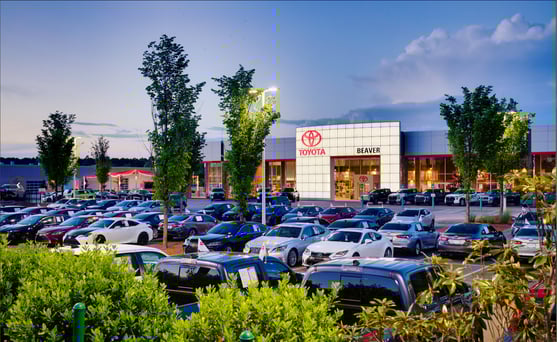
My own most recent considered purchase looked different on the surface but followed the same pattern. My wife and I bought a second car this year, and we'd known for more than a year it was coming. Our daughter was heading into middle school, the schedule math wasn't going to work with one vehicle, and we'd already narrowed the types of cars we were open to. By the time we really started shopping, we emailed a handful of dealerships about the specific vehicle we wanted, let them compete on price, secured financing through a credit union, and closed the deal.

Notice what's missing from that story: any meaningful influence from a dealership's marketing in the final weeks. The decision about which cars we'd consider was already locked in. The dealers competed on price and responsiveness, not on brand or persuasion. Whichever brands had built presence with us over the prior year were the ones in the consideration set. The rest were invisible.

car dealership lot

All the while, your marketing dashboard most likely doesn't reflect any of that. It reflects clicks and sessions and cost per lead and a conversion rate calculated on a narrow window that assumes purchase decisions happen in days, not seasons. 

That gap between the marketing engine you've built and the decisions that move your revenue is the most expensive blind spot in consumer marketing for considered categories.

What Makes a Purchase Considered

A considered consumer purchase is one where getting it wrong has consequences that linger. The money spent is significant. The item or service purchased is hard to return or undo. Other people will see it and have opinions. Ultimately, your consumer is making a decision that they will live with for years.

Cars, homes, kitchen renovations, flooring, mattresses, appliances, high-end furniture, luxury handbags, watches, engagement rings, private education, major travel. These categories all share a specific psychology that most marketing plans ignore.

The risk is personal, not just financial. A bad choice isn't just money lost. It's the guest who asks why you picked that color. It's the spouse who says "I told you so" every time they walk past. It's the neighbor who got a better deal. Buyers in these categories are protecting their ego as much as their wallet.

goslingjudging

The timeline is months, sometimes years. Flooring research cycles routinely run six to twelve months. Car buyers often start looking a year before they purchase. Home buyers can be in the consideration set for eighteen months or more. During that window, your brand is either showing up consistently or getting quietly eliminated.

The decision is rarely solo. While an individual may take the lead, couples typically decide together. Parents consult adult children. Friends get texted photos from the showroom floor. Even solo buyers crowdsource, checking Reddit threads, YouTube reviews, and group chats before committing. The purchase is a negotiation, and one person in that conversation is usually doing the work of persuading the others.

Most of the research has already happened before a buyer engages with you. They've read reviews, watched installation videos, compared brands online, asked their group chat, and driven past your showroom twice. By the time they talk to you, they're often looking for reasons to confirm a decision they've 90% made already.

When it comes to considered purchases, there's no clean progression from awareness to consideration to purchase. There's a loop, with buyers cycling in and out of active shopping, pausing for months when life gets busy, picking it back up when a tax refund lands or the family car finally gives out.

What Moves These Decisions

Trust signals do most of the heavy lifting. Buyers want confidence that they won't get burned. A warranty that sounds confident. Photos of installations in homes that look like theirs. A sales team that doesn't apply pressure. Consistency between what your ads promise and what your showroom feels like. If your marketing is aspirational and your store is fluorescent and awkward, buyers will feel the mismatch.

Proof over persuasion. When buyers are seeking confidence, real customer photos are worth more than stylized campaign imagery. Reviews that mention the slightly annoying parts of the process are more credible than ones that read like press releases. User-generated content from someone whose house looks a lot like the buyer's is often the single most decisive asset in the final stretch.

The household conversation. One person in the household is usually the driver. They're the one researching, pinning, opening the tabs, visiting the showrooms. The other person is the skeptic, or the budget hawk, or the one who wants to be convinced.

Marketing's job is to give the driver everything they need to bring the skeptic along. A comparison guide. A financing breakdown. A visualizer tool they can show over dinner. A showroom experience worth driving to together. Most brands market only to the driver and then wonder why purchase decisions stall in the "we need to think about it" phase.

Regret aversion is stronger than aspiration. The deeper the investment, the more buyers focus on avoiding regret versus maximizing joy. That should change how you write copy, how you structure guarantees, and which testimonials you feature. A customer saying "I was nervous about the cost but I'd do it again in a heartbeat" outperforms almost any benefit claim you can write.

What This Means for Your Marketing

Most consumer marketing teams in considered categories are structured in ways that work against how their customers actually buy.

Performance media gets optimized to a short attribution window that's blind to the six months before the click.

Creative gets built for the quarter, not for a journey that spans seasons.

Showroom and digital experiences live in different teams with different priorities, so the buyer who researched on her phone for four months walks into a store where nobody knows that.

Rebuilding your marketing approach around considered purchases starts with reframing what you're accountable for. How can you be meaningfully present across a long buying cycle, how can you influence the household conversation, and build trust that compounds over months. 

It also means getting real about customer insight. Who is the driver in the household? Who is the skeptic? What objections come up two weeks after the showroom visit? Which reviews are buyers reading, and on which platforms? A lot of this lives in your sales associates' heads and in customer service transcripts, and most of it probably isn't making it back into the marketing plan.

Content has to match how buyers research. That means inspiration content for the dreaming phase, education content for when they start getting serious, comparison and specification content for the evaluation phase, and reassurance content for the moment of commitment.

Lastly, the proof engine deserves real investment. Customer photo programs, review solicitation at the right post-purchase moment, video testimonials that don't feel staged, referral content built for sharing. These are the assets that close deals in month eleven of a twelve-month cycle. Most brands underfund them because they can be messy or difficult to obtain and organize, but if it will help close the sale, it's worth doing. 

Next Steps to Take

If you've gotten to this point and are stressed out about where your marketing currently stands: don't worry. The good news is that you don't need to rebuild everything. Here's where to begin:

Start with an honest journey audit. Map the actual journey a buyer goes through, from the first "we should probably do something about this" moment through purchase and into year two. Where is your brand present? Where is it absent? Where are you assuming a short window when the reality is months? This exercise tends to expose how much of your spend is aimed at the final weeks of the journey and how little is showing up during the long middle.

Pick one customer segment that matters disproportionately. Don't try to fix everything at once. Look at your strategy for the segment where winning a few more deals materially changes your year.

Focus and expand from there. Build or refresh your review and customer photo program, because if you don't have credible proof at scale, nothing else you do will land. Create content specifically designed for the household conversation, the asset the driver can show the skeptic. Align your in-store or virtual showroom experience with the research buyers have already done, so your sales team isn't restarting conversations from scratch. Set up a working session across marketing, retail, and customer experience to review how real buyers are moving through the journey and where the handoffs are breaking.

Brands that win in considered consumer categories over the next several years will be the ones that stop treating these purchases like fast ones. A family deciding on new floors or a new car or a home isn't running through your funnel. They're living their life, and your brand is either part of that life for months at a time or it isn't.


If you're rethinking how your brand shows up across a long buying cycle, reach out directly or start with our guide to Building Brands That Matter.


FAQ

What counts as a high-consideration consumer purchase?

Any purchase where the investment is significant, the decision is hard to reverse, and the buyer does extended research before committing. Common examples include homes, cars, flooring, kitchen and bath renovations, furniture, mattresses, appliances, luxury handbags and watches, engagement rings, and major travel. Price alone doesn't define it. A five-hundred-dollar purchase can be high-consideration if it's emotionally loaded or highly visible.

How long are typical consideration windows for these purchases?

Flooring and home renovation projects often run six to twelve months from first interest to purchase. New car buyers typically start researching three to twelve months out. Home purchases can involve eighteen months or more of consideration. Luxury goods vary widely but often involve weeks or months of research for first-time buyers in a category.

Why doesn't last-click attribution work for these categories?

Last-click attribution credits the final touchpoint before purchase, usually a branded search or a direct visit. In a twelve-month buying cycle, that final click represents maybe one percent of the influence that went into the decision. The Pinterest board, the YouTube review, the friend's recommendation, the showroom visit six months ago, the email that arrived when the buyer was finally ready, none of it gets credit. Brands that optimize purely to last-click systematically underfund the work that builds consideration.

What's the single highest-leverage investment for most brands in these categories?

A well-run customer proof program. Real photos from real customers in homes or contexts that look like the buyer's, combined with reviews that feel honest rather than scripted. These assets influence decisions across the entire journey, from inspiration through final commitment, and most brands underinvest in them relative to paid media.

How do you market to the household decision rather than just the individual?

Identify who typically drives the research in your category and who the common skeptics are. Build content for the driver that's specifically designed to be shared and to address the skeptic's concerns. A financing breakdown, a side-by-side comparison, a visualizer tool, a clear warranty summary. Make sure your in-person experiences work for both people showing up together, not just the one who did the research.